SLICE OF LIFE | Jeremy Thao
Dude will make you cry just by filming a bowl of rice on a table I swear

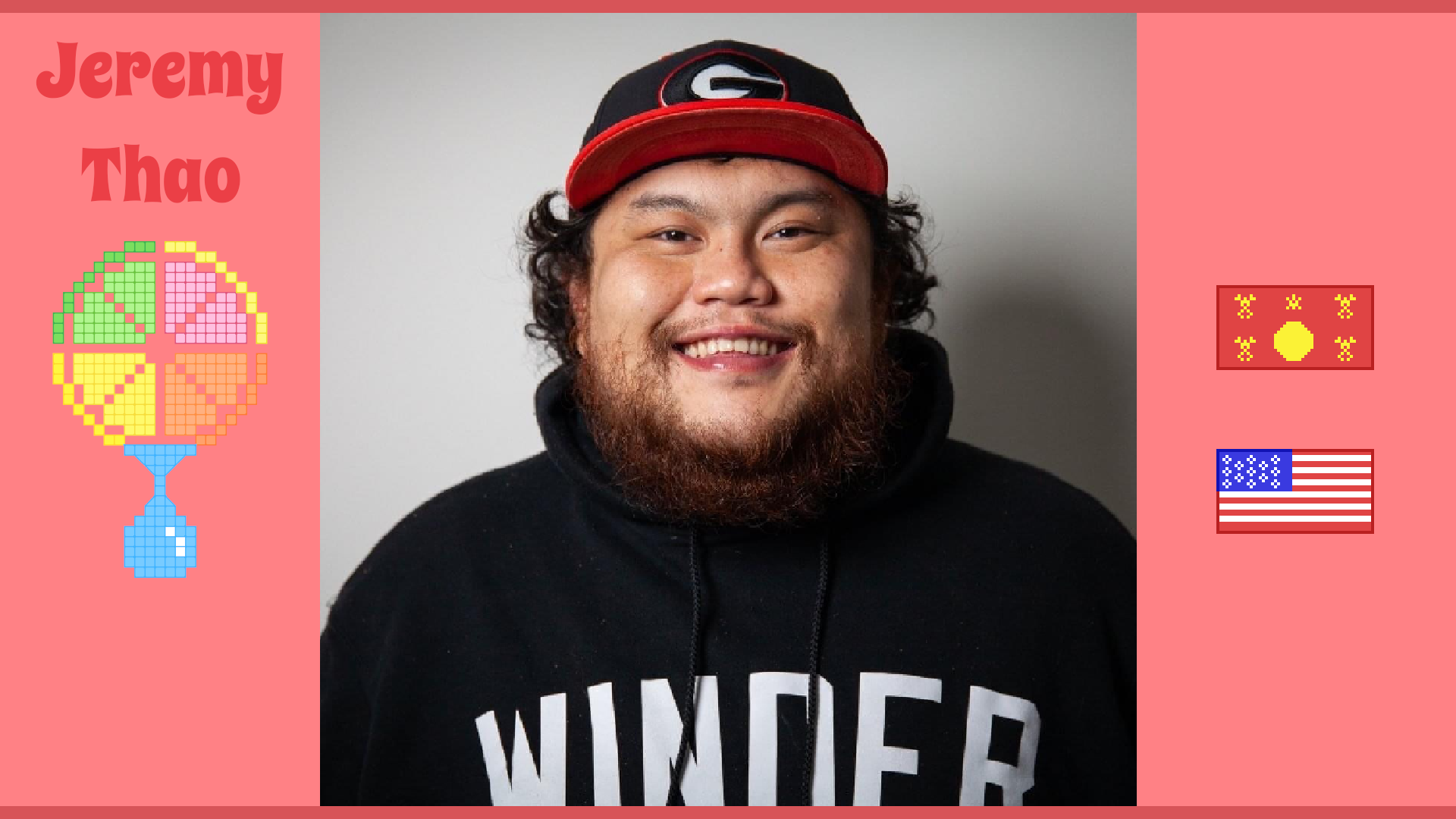
Jeremy Thao (pronouns: he/him) is a Hmong-American director and screenwriter known for his debut film “WOKMAN.” An homage to his Asian-American identity, “WOKMAN” is a story that is near and dear to Jeremy, using the setting of a Chinese-American restaurant as a vehicle to present his experience to hundreds of people across the country. In an ideal world, Jeremy wants to see more stories like his as he continues to navigate the world through a diasporic lens.
If it wasn’t obvious from his film, by the way, he’s also a huge foodie. He LOVES food.
Viv: Dude I can’t tell you how fucking STOKED I am to talk to you about Wokman
When I finally got the chance to watch it, I was like
“Oh my god”
You perfectly captured so many moments of me as a child in that one film
I don’t know how you did it, but you did.
Thank you for making that film. I really mean it when I say I’ve never felt so seen until I watched WOKMAN. It was great, it really was.
Jeremy: *sigh of relief*
Thank you, Vivi. That really does me a lot, for real. It’s unreal because I intently set out to share what it was kinda like for me to grow up as an Asian kid in the 90’s, right?
That’s simply what I was trying for.
You know, Vivi…I’ve lost count. Not many people have seen this short film, and you’re maybe the 6th or 7th grown-up Asian kid that has said the exact same thing. I can’t believe it every time I hear it, to be honest.
Thank you, this movie has lived inside of me for so long. Pre-production took 18 months, editing has taken almost close to half a year, so it’s like…I am so ready to unleash this movie into the world. I’m excited to hear that you like it.
Viv: I mean, I don’t see anything that isn’t worth being excited about watching this film.
Watching the teaser, I was like “That looks very similar to what I’ve experienced,” or looks like someone I’ve seen. And that’s important, because this captures one of many perspectives of a Chinese family in a Chinese-American restaurant.
But this doesn’t just appeal to Chinese families who run Chinese restaurants. There are Asian kids out there who have also grown up around a Chinese restaurant.
What’s most interesting to me is that you, a Hmong-American, chose to center your movie around Chinese-American culture. What made you decide that the film should take place at a Chinese-American restaurant?
Jeremy: Well, there’s conversation to be had about why a Hmong kid had to make his first project about an East Asian family, an immigrant Chinese family.
The thing is, your opportunities are few and far between, and when you get ‘em, you have to really have the viewer bite the hook pretty quickly.
I felt like I’d have to spend a little bit too much time in a short film explaining who and what the Hmong people are, so I really had to pick a family that lived in an environment—in a world—that was welcoming to everybody.
Welcoming to all skin colors, income levels…wherever you live, you’ve got a favorite Chinese restaurant, right?
Viv: Yeah!
Jeremy: Yep, so I knew that I could use the wide appeal and wide knowledge of the immigrant Chinese family restaurant and use that family as a vehicle to share my Asian-American story.
Viv: That makes so much sense.
Not many people know who the Hmong people are, but everyone knows what a Chinese restaurant’s like, right?
Jeremy: Yeah, exactly.
I also flirted with the idea of like…
You know how a lot of non-Chinese families run American-Chinese restaurants?
So I actually did flirt with the idea of maybe having a Hmong family run a Chinese restaurant. But thinking about it, I felt really led to really pay honor and respect to what Chinese people have gone through in this country—the only group of people who have been lawfully not allowed to enter this country.
That paved a lot of what other Asian groups went through later, so I ultimately decided to make it about an immigrant Chinese family.
Viv: I think that’s a good decision on your end, and for your first project too.
Exploring the nuances of the Asian-American experience is so important, and to start the conversation by talking about Chinese-American restaurants—something that everyone is universally familiar with—acts almost like a gateway to then discuss other Asian communities.
People might watch this movie and think, “well if this is how a Chinese restaurant is run by a Chinese family, can you imagine what other Asian restaurants are like?”
What is a Japanese restaurant like? What’s a Thai restaurant like? Outside of the food, what are the cultural differences? Etc etc.
In the teaser and the full movie, you have managed to capture almost every single detail of the immigrant Chinese family-owned restaurant experience. Almost every experience I’ve ever had as an Asian-American has been reflected in that film, and I imagine that other people who watch it will also know that feeling.
There’s so much to discuss about the movie, we’d be here for hours if we tried to talk about them all LOL
Jeremy: Hahaha
It’s a VERY Asian movie, dude. It is a very Asian movie.
I had to really commit to the mindset very early on of like, not having much time to explain things. Whatever’s happening on the screen, you just gotta pay attention. You either gotta be intrigued by it and want to learn about it, or be like “Holy fuck, I never thought I’d see that on a movie screen.”
For example, I’ve had more than one white friend watch the movie, and at the end they’re like:
“You can eat ramen dry like that?”
Viv: *GASP*
WHAT???
Jeremy: Hahaha
I’m not even kidding! I was like “Yeah bro, that’s like a normal Asian kid snack.”
Viv: It’s SO normal
Busting open the Maruchan packet and just eating it dry like that
And then you put the seasoning packet in it and you shake the bag
To people like you and me, that’s such a normal experience. But for someone who hasn’t had that experience, it’s a foreign concept. That interaction alone just shows the HUGE culture difference.
Jeremy: Haha yeah
Btw Vivi, we are welcome to talk about WOKMAN in any way you want to talk about WOKMAN.
Viv: OH
Well, if we’re going to go THERE…
Jeremy: We are. We definitely are.
I’m not really hiding anything, and I actually would love to talk about it and maybe encourage people to go to their nearest film festival that i may be playing at, so I’d love to talk about WOKMAN.
We just started our film festival circuit. We just got accepted to our first festival.
Viv: Omg congrats!
Jeremy: Thank you thank you! It's the Morehouse College Human Rights Film Festival at the Historical Morehouse College in Atlanta, GA.
That takes place in September, so our circuit has officially begun, and we’re excited.
Viv: Omg I am STOKED for you, dude. More people getting to see this? Hell yeah.
Especially in a state like Georgia where the Asian population is relatively small. But it’s that small population who will see this film and see their lived experiences on the big screen via a film made by this guy they just met.
I wish I could show you how excited I am to have that happen to you.
Jeremy: I really do appreciate that, dude.
Viv: Absolutely! Thank you for opening up the conversation for Wokman too, because now we get to really dive in.
Thinking about it, even if we do talk about the film in detail, it almost doesn’t feel like a spoiler. I guess since I’m an Asian-American with a lived Asian-American experience, the events that happen in the film don’t feel like a spoiler to me.
Because like I said, every scene you made in the film feels like a lived experience I’ve had. But maybe for people who aren’t Asian-American or don’t come from immigrant families, this is new to them.
Like the introduction that opens with Andy (the little boy) breaking open the ramen packet while playing on his Gameboy, followed by his older sister Leah doing homework ON THE DINING TABLE in the RESTAURANT.
It reminded me of the times when I’d buy dimsum with my family and we’d order the usual
Há cảo, xíu mại, bánh bao xá xíu, etc
And as I’m eating the food, I look over and see a seven-year-old sitting at a dining table or sitting on a plastic stool doing her homework
At first I didn’t know what to make of it, but as I kept seeing it more, I was like “Oh okay that makes sense, because they’re the children of immigrants who run these restaurants.”
Jeremy: You know they ain’t paying for an after-school program or something like that
Viv: You know they’re not
That shit’s EXPENSIVE
Jeremy: Hahahahaha
You gotta have a job JUST to pay for the childcare
Viv: Pretty much!
Jeremy: Hahaha
There are just so many little nods to different Asian experiences in the film
Like what you were saying, we got the eldest daughter doing homework while the boy’s playing a game. The phone is ringing right in front of his face and his mom is dealing with customers in a mess, and it just
There are just these little moments that have kind of existed in my brain for a long time that I've found interesting, and there are also lines of dialogue in this movie that are real lines of arguments of very tense conversations between my parents and I that have lived inside of me for a very long time. I was able to write them back verbatim (at least how they live in my memory) in this movie, so being able to purge a lot of things and a lot of memories and kinda being able to relive them, but having a creative control over them has been a very cathartic and therapeutic experience for me. It’s been great, it’s been fun.
Viv: I imagine!
Jeremy: Yeah, it’s been fun. And tough, very tough. But it’s been very rewarding, especially after…
You know, dude, the saying is like, “Finishing a movie is a miracle. If it’s good in any way, then that’s just a cherry on top.”
We spent so long making it, and now that it’s done and we’re starting to get some reviews back in, it’s really building up our confidence as we start our film festival circuit.
I don’t know if I told you this, but I'm officially going to turn this into a feature film.
I have figured out my story, and I am preparing my treatments so that I have that ready as we start visiting different film festivals, as I start shaking hands and stuff. Truth be told, I’d love to land a development deal. I very intently want to be paid by somebody to write the Wokman feature. It’s kinda the principal thing—it’s like a big career thing for me. I want to get paid to be a screenwriter and I know that I have it in me to become a professional screenwriter, so I kinda want to intentionally hold off on writing it until I can land a deal.
That’s just for right now. Maybe that’ll change. Maybe I’ll start writing it.
I won’t say much about it, but I will say a little teaser about the feature. It’s gonna be set during Thanksgiving week.
A lot of Chinese restaurants, the only day they close during the year is Thanksgiving Day, so they gotta use that day to catch up on a lot of stuff.
Viv: You let me know when that comes out, because I WILL be watching that
I’m glad you brought this up, because when it comes to holidays, everyone goes to Chinese restaurants to eat since they don’t close. Except for one holiday—Thanksgiving.
Jeremy: Yep. and you do a lot of stuff that day. You see family, you catch up on errands and stuff. You gotta pack it full.
Viv: If it’s anything like the quality of “WOKMAN.” I think it’s gonna be a great film. We NEED more people to see that. Not just people who don’t know what the experience is like. I want people who know what that’s like to be like “oh my god, that’s so true! Everything about this is so true.”
Because of the film, I stumbled upon a video on YouTube called “The life of a Takeaway Kid,” which talks about the lives of British-Chinese kids who grew up in takeaway restaurants (the British version of takeout restaurants in the US). They talked about their experiences working in Chinese restaurants and trying to navigate that while trying to navigate their British life.
With “WOKMAN” being based on the Chinese-American experience, we can see that there are distinct differences between Chinese-American experiences and Chinese-British experiences, but there are still some overlaps between them both.
That’s what I think is so cool. It doesn’t matter where you live, the Chinese restaurant experience is almost universal. You get the experience of having to take orders and clean the tables and whatnot.
(you also get really good food lol)
But unfortunately, as we both know, you also get the not-so-pleasant things like racism and discrimination. There’s a perfect example of that in the scene in “WOKMAN” where a customer walks in and screams, “You got my order wrong!,” and it becomes very tense.
You’ve either seen that as a kid, or you’ve experienced that as a kid. Your parents know that it’s bad, but they don’t really see the underlying racism the same way as you do, so you just kinda sit back because you don’t want to make a whole situation out of it.
Jeremy: Right. And it sits in you for a long time. You think about the way that we witness our parents get treated in front of us as children, and you see the way that, at least with my family and with my parents being refugees, there are moments where I saw that they’re happy to be here. They’re happy that their kids are fed and they’re happy that we’re safe and being educated.
They were running through the jungles of Southeast Asia. They don’t really give a fuck about some Karen yelling at them in a language that they don’t really understand that well.
We don’t have to be as silent as our parents were. Like, where are you going to deport me to? Fresno, California? I’m American, motherfucker LOL
Viv: Hahaha
“I was BORN here!”
Jeremy: Exactly! I can be as loud as I want to. I can make a movie if I need to. I’ve really, genuinely come to realize the power of cinema and the potential of filmmaking. Nobody gave a shit about my opinions at all before “Wokman” took off, and I get it. I’ve realized that I now regularly have conversations similar to this with a lot of young Asian-American folks who are doing really awesome things, and I'm getting to meet a lot of really awesome folks.
Going back to what you were saying about how this movie could take place pretty much everywhere, there’s one thing that I want to point out that really goes into that. If you pay attention, the mother and the father are never called by a name at all. Only the two kids are called by names. And I do that intentionally because I'm not saying that my two characters represent all immigrant and refugee mothers and fathers. But I am saying that there can often be a…
It’s tough to word this out without sounding insensitive, but we have seen our parents be looked at as characterless people, you know what I’m sayin’?
I really wanted to show a full spectrum of human emotion and capability of these people, but also very artfully keep them without an identity, without a name. They’re mom and they’re dad.
Viv: Oh my god…
Now that you mention it, I don’t remember EVER hearing their names get mentioned. Even when they have people talking to them directly, they’re never referenced by a name.
And that’s exactly what happens in real life. I see other restaurants and other places where there are regulars who are called by names. Mr. Jones, or Mrs. Smith, for example. But when it comes to Chinese restaurants, it’s just “Hey, you!”
You managed to capture an identity perfectly—without establishing an identity—just by them being nameless in the film.
I think the reason why I didn’t capture it at first was because that experience is so common for me to hear as someone who grew up with places like this, that I didn’t think to question it.
Jeremy: Yeah! No one has ever pointed it out. It would be more weird if they did get called by a name, to be honest.
Viv: Yeah I agree.
Jeremy: Yeah dude!
I read this opinion piece from a Chinese girl one time, and it was so weird because she verbalized what my thinking was behind “Wokman” in terms of names and leaving out names and stuff.
I forget what her real Chinese name was, but she was talking about how she adopted an American name, and she was like “I didn’t realize how long periods would go by where I would not hear my name said,” when she was just going by her Chinese name.
‘Cause it was hard to pronounce, right?
Then she was like “But once I switched my name to Ellen, I heard my name all the time. Multiple times a day, every day.”
And i was like “Holy fuck, that’s pretty interesting to read from this girl. Oh man, it fits in Wokman.”
Interesting fact: in the script, the dad’s name is Sam and the mom’s name is Mary. During pre-production and on the script and on the call sheets and everything, dad’s name was Sam Li and mom’s name was Mary Li.
Only you know that, haha
Viv: Wait wait
Okay
Hold on
Jeremy: But that’s not their real names, you know what I'm sayin’?
Viv: Okay back up back up, I need to process this LOL
You’ve embedded what you just said before about adopting an American name into the script.
If they had regular Chinese names during production, you wouldn’t hear their names often, or you’d hear an anglicized version of their name in passing. So them having names in the script but not in the film meant that during the production, when you were talking about them, you created another Asian-American experience where your characters have a basic English name that people can now reference and can say multiple times, even though it’s never said in the movie.
Do you know how fucking COOL that is???
Jeremy: hahahahaha
Thank you dude! For real.
This is the first time I've talked about this with another person. Like, this has lived inside of me for forever. And it’s really cool that you think it’s cool. I’m being serious.
Viv: and I’M being serious!
Jeremy: It took a lot of thought…a lot of intentional thought went into this. It’s not really talked about or explained or highlighted very much, but it’s really cool to break it down and discuss it with someone.
Viv: It’s so crazy how much you put yourself in your film. I would almost like to think that this is an autobiography of your life.
I want to think that all of this is a reflection of you, but I’m wondering how much of this film is a reflection of your life. Let’s go into that.
Jeremy: Yeah, absolutely.
So it is partly autobiographical. We’ve never owned a restaurant.
I was born and raised in Fresno, California, which is the very center of California in the middle of the San Joaquin Valley. It's a very agricultural area—a lot of Hmong folks live there.
My mom’s sister and her husband (she has since passed), they were out here in Auburn, Georgia. They were educated out here and had jobs. My uncle was one of the very first people who started selling sushi in grocery stores (this was like ‘97, ‘98-ish). He was kinda leading that way, contracting companies, and he had a Publix at Lenox Square, which is a really bougie mall, and especially back in the late 90s in Atlanta.
He was doing really well doing that, and he was working a lot. My dad (who was the eldest of five sons) and two of his younger brothers came to Georgia during summer of 2000 for a funeral and they were staying with that uncle. They saw that he had just built his own brand new house that he designed and led the construction. He’s making all this money making sushi and he tells my dad and his brothers, “I’m being asked every week to take on another grocery store, and I want to do it, but I need someone I can trust who wants to learn how to do it, who wants to move out here.”
“And by the way, there are these parcels of land adjacent to mine that are for sale.”
And just like that, my dad decides that he’s gonna buy this land and become a sushi chef. So he comes home (this was the beginning of August of 2000) and he was like, “we’re moving to Georgia on September 1st.”
I turned 12 on August 26th, and on September 1st we made our way to Georgia. On the trip was my family and two of my dad’s younger brother’s families. We rented the biggest U-Haul they make, and in the U-Haul was two of my uncles and myself. In our minivan following the truck was my dad driving, my mom riding shotgun, and aunties and cousins in the van. My auntie just had a baby, so she flew haha
I like to call it the “Reverse Beverly Hillbillies.” We went from Cali to Georgia with two K-Mart Walkie-Talkies (‘cause this was 2000), so we didn’t have cell phones.
Just like that, dude, we moved coast to coast. My dad and his brothers, they took on their own grocery stores and for a while, they were all making hella sushi. A lot. And I helped out on it. Saturdays and maybe once or twice a month, three to four times a month depending. That’s where I really drew a lot of my personal stuff for Wokman—interacting with people as a fucking 11-12 year old kid running sushi out to people and all that stuff.
We never had to own a restaurant, but we did kind of experience that life for a while, and that didn’t work out for my dad. He eventually gave that up and kinda went back to being an electrician. But again, I was able to just really use the vehicle of the Chinese restaurant and the family that runs it to deliver a lot of my personal memories and experiences. It’s very autobiographical, but more so in the spirit and a lot of the happenings and the dialogue.
Viv: Your story is so vastly different from what is seen in the film, but your experience still touches on it spiritually. Like I’ve never ran a restaurant before in my life, but I was able to relate to a lot of different parts of Wokman as I was watching the film. Walking into a family-style restaurant, you’ve seen that before. I’m sure if you put all of our timelines together like threads, at some point in that thread, there is a Chinese restaurant there. And everyone’s timeline just lines up together.
So it’s really smart to share your story through that. Even though you’ve never experienced owning a Chinese restaurant specifically, you went through that spiritually.
Jeremy: yep.
Before the cameras turned on, I think the final count…the script was greenlit and blessed by at least six (minimum five, but I think six) grown-up Chinese restaurant kids. That was big for me.
Viv: that’s how you know.
You know how Asian parents are typically like “eh, you did good.”
To get Asian adults to say that “yeah, do this film.”...that is gold.
Jeremy: Absolutely.
Getting their blessings and…it was interesting to talk to many of them.
There’s one person in particular who has actually…my dude Henry. Uncle Henry. The uncle of our child actor.
Viv: OH?
Jeremy: Yeah, we ended up surprising him with an executive producer credit. He helped us get our location, he was our cooking stunt double at the wok, and he has been a great financial support for our film festival circuit. He has just been…and he told me too he was like
Dude, I would love to just tell you…you’d love this. Let me tell you about Uncle Henry.
So when i casted the boy, his name is Corey Jung, he already got some pretty heavy credits under his belt, and I genuinely feel lucky to have found him for Wokman. That kid is gonna be a fucking superstar, dude.
At the time of his casting, his family still coincidentally had their own restaurant in Atlanta—a Chinese restaurant called Fung-Mei. So his mama was like, “you should come during a slow time in the afternoon and you should see the restaurant, we should just have a family meal.” and I was like “absolutely.”
Viv: Hell yeah
Jeremy: So I go to the restaurant and we go to the family section of the restaurant, the part where no one can see you. And just like an Asian auntie dude, I Was like “it’s just you and I eating, you gotta stop bringing out food. You know what I’m saying?” Hahaha
Viv: YEAH
IT’S ALWAYS THE AUNTIES AND GRANDMAS ALWAYS BRINGING OUT DISH AFTER DISH MAN
Jeremy: YES
YES!
And she’s like, pouring food onto my plate and she’s simultaneously using scissors to cut noodles and pouring more food onto our plates. I was like, “Okay…let’s just eat this first before you bring out more,” and it was awesome.
So during our meal, her older brother Henry came out, the head chef who’s been running the show after their father passed away after being there for many, many years. This guy, he’s a rough-around-the-edges Asian dude. He’s been in the restaurant business his whole fucking life. He’s a cool dude, very protective of his family. Over time, Uncle Henry became so much like a father figure to Corey.
So Henry starts chatting me up and starts asking me some pretty good and tough questions. He’s asking questions like “What are your goals and intentions with Wokman?” and I’m like “I’m being very transparent here: the ultimate goal here is to hopefully launch my filmmaking career and land a feature film deal to turn this short film into a feature. That is what I am very transparently gunning for.”
He goes, “I’m rooting for you, man. My nephew’s success hinges on your success, so I got your back.” And since then, he’s been a huge fucking part of Wokman ever since that conversation, dude.
Uncle Henry’s really fucking cool.
Another fun fact: the boy with the Power Rangers and blouse in the film—that’s Uncle Henry’s son. That’s Corey's cousin, actually! They’re first cousins and they’re sharing a screen together for the first time ever in filmmaking.
Viv: That’s fucking COOL!
Jeremy: Yeah, that was special for us…for everyone who saw it.
It’s been a true family affair. A genuine community and family affair. I’m just trying to steer the ship at this point.
Viv: What a cool and collaborative effort! Who better to work on a film with than your family? It doubles as your own community since they all come from similar walks of life, so they understand your vision. You don’t really have to explain much, and that’s very important.
You would think it’s very common, but when you’re different from the people around you who don’t look like you, community is all that you have—especially in your case as a Hmong-American.
The sense of community feels very strong here in “Wokman” because of the idea that a lot of Asians (and in our case, Southeast Asians) don’t really have a place to call our own, but our people…we got each other.
Jeremy: That’s a really great segue into that part of everything I’d love to talk about
My ethnicity and my skin color has always been a very difficult subject for me, especially after my family and I left Cali.
I mean shit, dude. In 6th grade, my last school year in Cali, there were maybe about four white people in the class. Everyone else was like…Indian, Black, Hispanic, Chinese, Hmong, you know what I’m talking about. It was like a true melting pot, and that’s how I grew up in Fresno.
But then you come here to the countryside of Northeast Georgia, and it’s incredibly different. I think there were like three asian kids in the whole middle school, including me. The other two were Vietnamese siblings, brother and sister. It’s like a bizarro world for me as a 12-year-old kid in the 7th grade.
I was in the gifted/honors program, so I was with the same group of kids all day. I was so thankful for that, because there weren’t that many mean kids in that group. But at the same time, you know, it was me and 29 other white kids, 8 hours a day for years and years, hahaha
So my closest friends in the world were all white and…you know, when race was occasionally brought up, I definitely had the self-deprecating struggles of being an Asian-American kid, that kind of shit going on. That carried on throughout my 20s into film school and…when you join film school and you start thinking about creativity in a much different way, you kinda start having to look at different parts of yourself.
I remember in film school for a long time I was like, “I don’t wanna be a dude that gets pigeon-holed into just making Asian stuff,” so I was like, very intently not making Asian stuff.
For my feature film writing class, I did write a feature film about the Hmong people, which like…I wrote it in a class in a hurried fashion. It’s a great skeleton of a story, but I plan on kinda reworking it as I grow as a filmmaker. Other than that, I really stayed away from Asian stories, and nothing really ever hit or caught me on fire.
At that point, I had graduated and joined the film industry. I was cutting my teeth in this industry in a non-creative role as an assistant director. For many many years, I was helping other people make their movies and their commercials and their music videos.
A few years later, the pandemic hit, and everyone was in quarantine. and I was like “well, I don’t have the excuse of finding work to not write.”
So this really great group in Atlanta called “Film Impact Georgia” has a filmmaking grant competition twice a year. The only thing that’s required to enter the competition is a short film script and an inclusion statement, along with any other documents you think might help. So I was like “Fuck it dude, I need to make a movie.”
At the same time, the anti-Asian hate ran parallel with the rise of COVID. This was approaching Christmas time in 2020, a really tough time. So I was like “I gotta make a fucking movie.”
I used Film Impact Georgia as a deadline to motivate myself to write the script. Didn’t expect me—a Southeast Asian man—to write a story about a day in a Chinese restaurant and win. Like…listen to that sentence. I didn’t really expect to catch much attention with that—I was just making it for me. But sometimes, we need to create what needs to exist in this fucking world for ourselves. And sometimes, only you can satiate that.
So I used the competition to write the script. Soon after submitting it, I was surprised when I saw that I was listed as a top 10 finalist. I was pretty sure that was how far the train was going to go.
We got to answer some really cool essay/interview questions and chat with folks. We’re able to always say we were finalists, it was a really awesome grant.
Three weeks later, my producer called me…and told me that we won the whole thing. I’m pretty sure she was crying a bit, too.
We won $5000 and the mentorship of an industry professional, and that was ultimately what started Wokman.
From there it was like, “well.. How do we turn $5000 into 30,000?” and in that moment, I knew we were going all the fucking way with this thing.
I quit freelancing, I quit working as an assistant director, I quit working as a set lighting technician. When I won the grant, I was actually coordinating with a show called “Legacies” on the CW, which is a spinoff of “Vampire Diaries,” and I quit all of it.
I started concentrating on my screenwriting and my directing. Even though I wasn’t getting paid to do it, my team and I were going to produce Wokman like it's a feature film, and that’s what we did. I worked non-film jobs to pay the bills during this whole process so that I can truly creatively and passionately commit everything I’ve got to Wokman. It‘s about time that we start seeing what kind of fruit we’ve planted and taken care of.
With a portion of our grant money, I found a Hmong-American graphic designer from Minnesota. We had her design our logo, our branding, everything. I knew the community and social media was going to be our anchor for this whole thing. I was like, “we need to be confident. This is not the time to use free Microsoft available fonts and branding and stuff. We gotta put our money where our mouth is, we’re gonna pay a Hmong-American woman to really knock this shit out of the park.”
So $1000 went to that, another $1000 went into the teaser, and from there we started building our community online. At the beginning of the pandemic, I jumped back onto Asian Twitter, since a lot of folks jumped back when quarantine started. Asian Twitter and Screenwriting Twitter have been really great for me during all of this. It was really cool to start talking about Wokman and you start engaging with people in an online space.
The whole thing about community, especially in the creative community, is that if you want to benefit from the community (which is fine), you still need to give back to them and you gotta aim to give back more than you take. So we start engaging in conversation and you start doing all of this stuff on these different social media sites for a long time. While all of this was happening, we were working on the crowdfunding campaign behind the scenes. We were working on all of this stuff so that one day, out of the blue, we could be like “Hey y’all, we’ve been working on this thing called Wokman. Next month we’re releasing this crowdfunding campaign. If you’re interested, you should check it out.”
After being an active participatory member of this group for a long time, it was much easier and more comfortable for me, especially because of how genuine and earnest we were in doing this. It fucking worked, dude, and it took off. We hit 107% of our crowdfunding goal and ended up raising about $23,000 on top of the $5000 from the grant. This whole thing turned into a $28,000 movie, which is insane.
But it wasn’t just $28,000. It was $28,000 of other people’s dollars. I say that all the time because I myself need to be reminded of that. It’s not my money, so it’s my job to make sure that every fucking cent is spent wisely and honorably. During this festival circuit, i now have to seriously look at people in the eye and be like:
“...you wanna give me like $8M dollars?” hahah
Viv: LOL
Jeremy: Like I’ve got this short film. I made this movie with only 28 G’s. What could I do with 3 mil and a professional producing team to help us. Who knows?
Correct me if I’m wrong, but I think “Everything, Everywhere, All At Once” only had a $40M budget. They were able to create utter magic with a restricted amount of resources and money, whereas you’re having a lot of first-time directors in TV and in film who are being given astronomical first opportunities and sometimes astronomical second and third opportunities after they shit the bed on the first opportunity.
So it’s like…what if the Daniels had $80M?
That’s why I’m refusing to write the Wokman feature right now, because I want someone to pay me to write it. I put so much work into this short film, which is now a proof of concept—it’s not just a short film any longer. It’s time. It’s time for us to start reaping the appropriate financial rewards that go along with all of this.
That’s what I’m trying to prove with this movie: that I can deliver on the highest level. Look at what I did with this limited amount of resources. It’s exciting to see what is to come. We’re stoked.
Viv: Exactly. It’s time for people like you to reach your dream budget. You didn’t fuck around with the $28,000 that you got. It was the people’s money.
There’s a saying out there that you vote with your dollar. You usually only hear that at places like supermarkets, but you’re also voting with your dollar for things like this—for films, for games, for music, for everything.
So that $28,000, from my perspective, is not just people throwing money at you to make a film. This is people looking at your film and looking at the concept and saying, “I want this on the big screens. I want to see you on the red carpet getting interviewed.”
“I want to see some finance bro give you $10M so you can make the biggest blockbuster hit.”
You shouldn’t have to deal with minimum viable products anymore. I wanna see you hit a dream budget from someone so you can make more films like Wokman, and for other people to also be paid well to help you with that. That’s the dream.
Jeremy: Yeah, absolutely. I want to see that too, dude. And to be honest, that has kinda been a huge inspiration in me breaking out of my shell.
I am an incredibly introverted and shy person at heart. Growing as a filmmaker and promoting myself as a director and screenwriter is kinda like…there are other talented folks who are a lot better at promoting themselves and selling themselves and talking to people who are big decision makers and stuff. Thinking about that, I was like “…you know, I kinda need to get good at that too.”
That’s been a thing we’ve been working on. Having conversations with folks like yourself and getting comfortable talking to people I don’t know, but still having meaningful connection and conversation when we do meet. You get very few opportunities to chat with cool folks who are like-minded and are doing cool things. I wanna make sure that we have meaningful interactions and can inspire each other to do cool things.
Viv: I’m willing to bet that we’ll all be able to come together and share our skills and build a community, or even just talk about random things.
AND SPEAKING OF RANDOM THINGS
Let’s head into the last section of this interview: Choose Your Own Question
Which one do you wanna do?
Jeremy: Hmm…
Let’s do #2 (Creative Cuisine)
Viv: ALRIGHT SWEET, I’M PUMPED FOR THIS.
The floor is yours.
Jeremy: Alright, so…growing up Hmong-American, we are people of no country, right? So our food is a very interesting cuisine that is kinda directly tied to the type of people we are
So even though we do have a unique collection of food, we do have foods that are very similar and very much obviously inspired by other Southeast Asian foods. And I say all of that to say that my favorite dish in the entire world is: my mother’s chicken phở.
I think that phở gà is the best food ever created. I don’t even consider going out to eat phở, it’s just going to eat food, in my opinion.
I get emotional thinking about phở. I don’t get to see my parents often since I don’t go home often. But when i do and i get asked what I’d like to eat, it is always chicken phở. Every bowl that I have that is outside of my mother’s house, I'm trying to dress it as best as I can to try to get it as similar as I can to my mother’s.
I make bastardized, quick versions at home when i’m missing home and family, you know. But i’ve been thinking a lot about our food—Southeast Asian food. If I’m alone, I’m going to get good at Southeast Asian food. And that’s how it’s been for a while. I just want to learn so much about it. It consumes me. I mean fuck dude, having a ball of sticky rice in my hand and some laab, that is being Southeast Asian to me.
So I've been trying to cook more Southeast Asian food at home. I’ve been trying to get more comfortable with cooking laab and cooking more Hmong foods, but you think of the simplicity of chicken noodle soup and you think of the variations of chicken noodle soup around this world and they’re all beautiful and wonderful, but to me, phở ga…there’s no comparison, dude.
It’s food of the gods to me—i just love talking about my mom’s phở and thinking about eating with my family.
Viv: Bro, as someone who probably has phở broth in their veins (being Vietnamese-American and all), I whole-heartedly agree with you that chicken phở is unmatched. There’s something about a big bowl of rice noodles with chicken and all the herbs and stuff that makes it such a comforting dish.
I think what you said about eating food with your family is important, too. Living in this country, man…trying to make a living, trying to survive, it takes a lot out of you. Realistically speaking, one of the few times where you get to be with your family…is when you eat. Because we all have to eat.
Jeremy: Yes. Yes. Yes.
It also means you don’t have to talk as much.
Viv: LOL
YOU’RE DAMN RIGHT
You don’t have to talk about your grades, your social life, anything.
As children of diaspora, we sorta live that double life. There’s a whole life they don’t know about and you don’t have to talk about it.
And besides, the food’s bomb.
Jeremy: Exactly.
It’s special. And the older I get, the more I yearn for that and the more I miss it. And so that’s my answer. It’s chicken phở. I love it.
Viv: I could have not asked for a better answer. I’m so thrilled to hear that.
So when you get phở, how do you assemble your bowl? Can we get into that? I’m curious.
Jeremy: Oh yeah, for sure. For sure.
So this is just the way I’ve always done it. So like…shit, I’ll use a whole plate of herbs and bean sprouts by myself LOL
As many bean sprouts as I can fairly take, and as much of the herb plate that I can fairly take, to be honest. I tend to stay away from the fresh jalapeño, especially if I’m out and about. I’ll get the heat from the sriracha and especially the chili oil, a lot of—I mean like a LOT of chili oil. I just prefer that to the jalapeño.
I always forget the name of it, but the scallion oil…I always try to get some of that if it’s available. I like to put a little sprinkle of sugar in it as well to really balance out the heat and the oiliness. The sugar really accents the citrus from the lime and all of that.
As I get older, I try to put less and less hoisin sauce and really just appreciate the broth more. I don’t know if it’s like, the “proper way,” but I do know that other people put the condiments on the side in a plate, and then you dip each chopstick-ful into the condiments and then eat it. Personally, I just put all the condiments into the broth and just mix it all up, and then I’ll drink a lot of the broth like per chopstick bite. How about you?
Viv: So in my opinion, I don’t think there’s any “wrong” way to eat it. Maybe questionable ways to eat it, but maybe not wrong.
I guess maybe…I don’t mean this in a mean way, but eating it with a fork is probably a cardinal sin. It has to be eaten with chopsticks.
Jeremy: Agreed. Agreed.
Viv: Yeah
For me, it’s pretty similar. I add all the herbs and bean sprouts, and then add a couple of slices of jalapeños—enough to add some heat but not so much that it takes over the flavor of the phở. I’m for sure gonna steal your idea about the chili oil though, because I LOVE to eat chili oil with dishes like fried rice. So I”ve gotta try it.
Jeremy: Yes, you gotta. It’ll change it.
I had it for brunch today, actually. I had a bowl of chicken phở this morning and then took a nap earlier before this LOL
Viv: haha! I mean you gotta. It’s comforting food.
Jeremy: Very much so.
Viv: So we’re nearing the end of the feature, any last thoughts or advice you got?
Jeremy: I think I’m good. I’m just really appreciative of you and Blood Citrus* and I'm rooting for you dude. I’m here to support you in any way I can.
If anyone wants to check out WOKMAN, we’ll keep track of where we’re traveling to for our film festivals on our socials. If we come to a film festival close to you, I would genuinely love to meet anyone who’s reading this. If you want to come check out the movie and talk about movies for a bit, I’d love to meet anyone I can from this audience.
Viv: I’m sure there will be a lot of people who will want to see this film. I can’t wait to see what happens when your circuit starts in September.
Jeremy: Let me send over the trailer for Wokman so you can post it in the article, and we can wrap up here.
Viv: Hell yeah.
You can watch the trailer for WOKMAN here:
FOLLOW JEREMY ON SOCIAL MEDIA
Instagram: https://instagram.com/jeremythao
Facebook: https://www.facebook.com/jeremy.thao/
*This project was known as "Blood Citrus" at the time of this interview's process and publication. As of March 2025, this project has been rebranded as "CitruSEA."
Author's note: This interview was published on October 12, 2023. On February 22, 2026, WOKMAN had its global premiere through Omeleto. You can now watch the full film here and on their YouTube channel!