SLICE OF LIFE | Victor Pothikan
Does he even play VALORANT, tho?

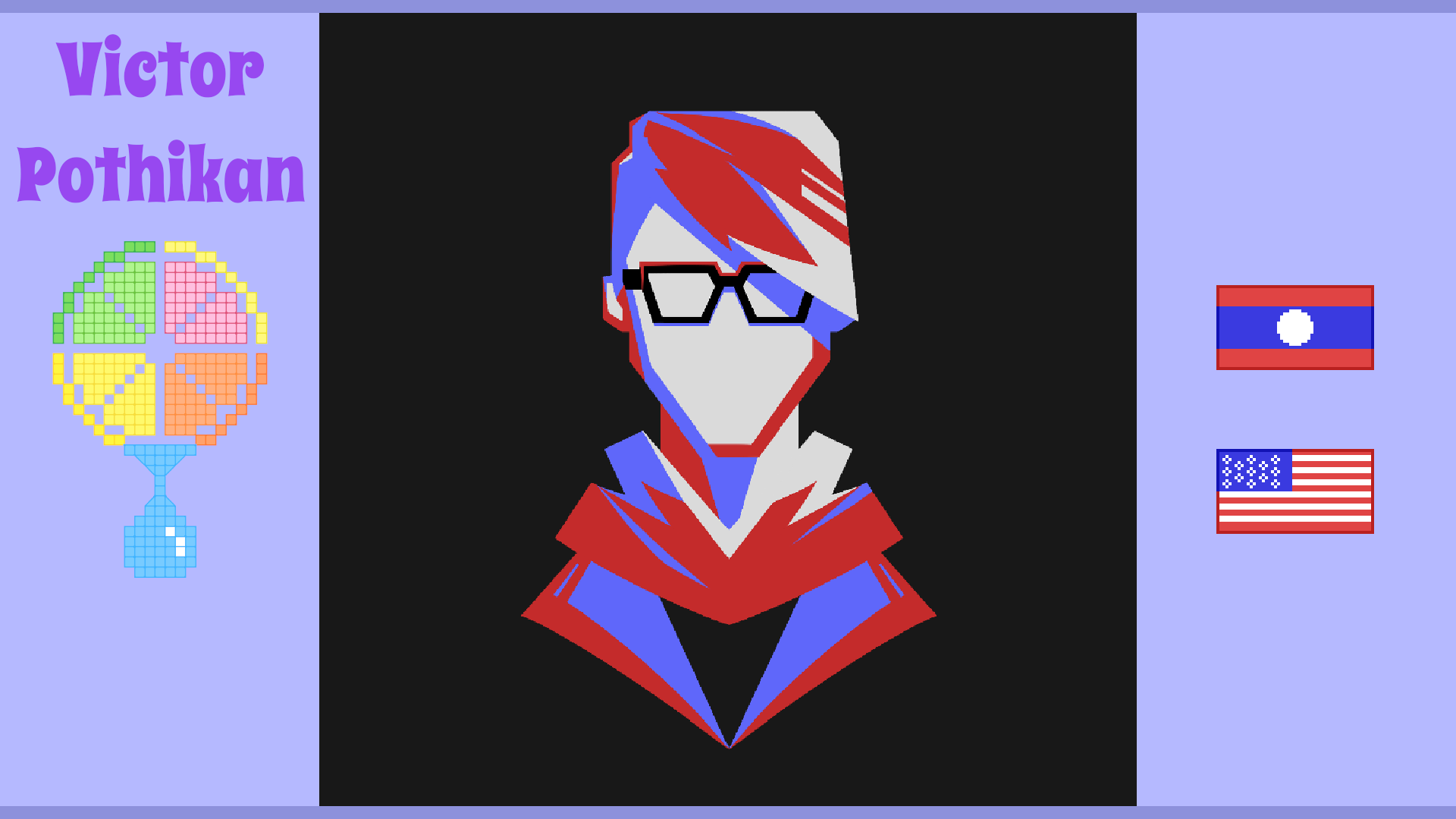
Victor Pothikan (pronouns: he/him) is a Lao-American esports observer working under Riot Games. Experienced in observing VALORANT and League of Legends, two of the biggest esports titles under Riot, Victor knows a thing or two about finding the grandest moments in every match. Perspective is everything, and it’s people like him who skillfully showcase the talent of 10 to an audience of millions.
fun fact: he does well with spice. At least, we think he does well with spice.
Victor: I assume the feature has started?
Viv: YES IT HAS
LET’S GET INTO IT, VICTOR
Victor: Copy that.
Viv: HELL YEAH
Let’s talk about esports observing, because I think people in esports know what observing is, but to the general public (and maybe people who aren’t as in tune with production), I think it’s best to start with giving a general description of what an esports observer is and what they do.
Victor: Alright
Well coincidentally, that is something I’ve been doing somewhat recently. we’ve been having a lot of guests come around the Riot studio and we have to describe what we do…hopefully I’ve practiced well enough.
So what is an esports observer, and what do they do? An esports observer is basically the virtual cameraman. Not some AI, not some robot. It’s not us cutting between each player’s PC or their monitor during the games, no.
there’s an actual camera client, a spectator client, inside the games. There’s a specific role called an “observer,” where someone has to be a director of sorts, changing the POVs, the scenes, and all the different cameras in the games so that it’s viewable and watchable for all audiences.
A good comparison would be American football. there’s a ball cam, where someone is following the ball with the camera. It’s as simple as that. That could be our jobs, or rather some people’s jobs as an observer.
Recently, in the past few years, they have helmet cameras, and the director or someone else will be cutting between the helmet cameras to get different replays and such. Imagine those helmet cameras, but that’s the main show. The people who man those cameras are the observers inside the game.
…I hope that makes sense.
Viv: It does! So basically, in a live production studio with physical cameras on-site, you’re basically the virtual version of that, doing it online.
Victor: Yes
Viv: So they capture the crowd, you capture the in-game moments. It sounds like that’s where the differences lie.
Victor: Yep, we capture the game.
Another term for “Observers” is “In-Game Directors,” because we don’t have the director telling us to “ready camera 2, cut camera 2,” for example.
Most games move pretty quickly, so it’s not a viable option or idea, which means the observers are also the directors. We cut to whoever’s POV we want at any given moment, and no one can really stop us, cause it’s our job and we know how to do it hehe
Viv: Yeah, and from what I’m understanding, it’s different compared to live production in the sense that in the game, the players are just focusing on the game itself. They’re aware that you’re observing them, but it’s not like they’re conscious of the camera to the point where they know when to do something at a certain time so that the camera just happens to catch them at the right time.
So you’re kind of…reading the game as it goes and you’re trying to see what the best angles to do it at.
There are so many parallels I’m seeing so far between having a physical camera and being director on-site vs. virtual in-game directing.
Victor: Yep, that’s the gist of it.
Viv: DANG
I think we’ve just opened a can of worms here, cause this can go in many different directions.
Victor: Yeah, and it can go in even more directions depending on which game we talk about—or even a different genre of games
hahaha
Viv: YEAH let’s get into THAT
so from what I remember, you told me that you were an observer for VCTA, or Valorant Champions Tour: Americas. I don’t remember if you did anything else outside of VALORANT.
Victor: I’m currently one of the observers for the League of Legends Championship Series in North America (LCS), i worked on both the spring and summer split.
Viv: OH so you’ve done League and VALORANT.
Victor: Yes. It’s easier to say that I’m just a Riot observer at this point. Not full-time (I’m still contracted), but I pretty much am a Riot observer at this point.
Viv: so you have both of these games under your belt.
I think what’s really cool too is that both of these games, League and VALORANT, are both played with different player perspectives. with League, you’re playing from a top-down bird’s eye view, whereas with VALORANT you’re playing it from an FPS point of view.
I’m guessing that you have different approaches to the way that you observe based on the game you’re observing.
Victor: It’s like two different worlds
Viv: LOL
Victor: I would say two different approaches, it’s like traveling to two different worlds.
Like you said, League is a top-down bird’s eye view game. The client for it has been in the works for 10 years, and it’s still not as good as it could be
the game itself, there’s a meme about the coding for the game being so old and no one has really changed it. they call it “spaghetti code.”
Viv: omg HAHAHA
Victor: so it's really hard to work with. It’s really hard to add stuff to the game. It’s also hard to even change things. Honestly, you could make a whole college course class of how to figure out this code, if you want to. but the client itself is very simple in terms of observing.
It’s in a top-down view, so you can capture anything as long as it’s in frame and not covered by the UI or the heads-up display.
How I approach it is, I would use the rule of thirds, which you normally hear about in cinematography. I use that a lot more in League. I don’t try to keep everything centered, though, because if it’s all centered, it’s kinda boring. Sometimes there’s a 1v1, for example, and you want to use the rule of thirds there to capture the different focus points and try to show an easier point-of-view for the viewer.
Now in VALORANT, the majority of it is in first-person view. We do have a free cam, similar to a spider camera or a drone camera, for live production. sometimes i’ll be on that and i’ll try to get different angles to show from a different top-down view or some other camera angle, like a security camera angle or some cinematic points.
There are other specific differences as well, but the main difference between League and VALORANT is that League is a little more calmer, because you can capture everything in-frame. You can just zoom out or pan over, and it’s as simple as that. With VALORANT, it’s a lot more hectic. It’s a lot more fast-paced, because the main point of view for that game when playing it and broadcasting it is not top-down, it’s first-person view. So even though you have a mini-map, a kill or a takedown could happen from across the map, and you won’t know that for sure. you have to be ready almost all the time to take that POV, or get the right POV to show off what just happened or show whatever story you want to show off.
Viv: So it sounds like there’s an element of storytelling to this. Outside of just capturing the best moments, you are also telling a story through live esports broadcasting.
Victor: Yes.
For me, my philosophy for that is each game is a different story. Sure, the casters and the producers could have a whole story meeting for hours and talk about what’s great to talk about here and what kind of story we can make there.
But in the end, that could change on a dime with the snap of someone’s fingers. That story can change completely.
The underdog that no one expected to win just somehow pulled the greatest upset in the world, and the story meeting that they had for hours could be completely useless. The observers, however, we don’t get to be part of the story meetings, because we know that something will change, something will happen. Each moment in the game is a different story.
For example, in VALORANT, the simple concept is:
5v5, attacking side puts exploding thing on the ground. Make sure exploding thing explodes.
the defending side makes sure the attacking side doesn’t plant the exploding thing, and if they do, they have to defuse the exploding thing.
The story for that is very simple. But how do they do it? How do we go about showing that? Are the defending side really great at defending? How are we going to show the attackers breaking down that defense? Is this one person going to be the next Faker, or are they just having another good day? Something like that
Viv: Thank you for the simplified rules for VALORANT lol
One thing that I really like that you brought up is that the objective of the game is so simple, and I’m talking about VALORANT, but League is sorta the same thing in that
Team go down lane. Destroy Nexus.
Like that’s the simplified version of what League is
And yet, what i and a lot of other people really enjoy about these games is the way these teams complete these objectives. That’s where the real storytelling begins.
I actually had an esports storytelling phase where I thought a lot about how the characters in each world have their own stories. So League has its own universe, VALORANT also has its own universe, just the characters themselves—we’re not even considering the PvP aspect.
But then we have what you mentioned: the players. They have their own story of how they went about gaming, how did they compete, etc. What ends up happening is when we have these players and we have this game come together, we have this third story that’s being told, and it’s how the players influence the character, and how those two are intertwined together to become this esports storyline. Like you said, is this person going to be the next Faker, or are they going to be an underdog? Are they going to come back in the next tournament, or are they just going to continue being bad or being good?
I wanna know, btw: to some degree, do these stories influence the way that you observe? Like, if you went into a game and you see the lineup, and you have a general idea of the players and their playstyles, do you try to observe based on that?
Victor: That might be true for some observers. For me, that’s almost rarely true. Personally, I keep in my head that each game is a new game.
Each game is different. someone could be feeling really good, or someone could be feeling really bad, so even if I know this person’s playstyle, they might still lose, because maybe the other team knows their playstyle and they changed their playstyle to counter theirs.
So for me, I try to keep an open mind. For example, if the players are playing a fast game, it’s going to be a little fun to watch for me personally. But is it going to be fun for the other team? Am i going to capture it like that for them or do i want to keep it fun for the audience? That’s where I have to be like…
Even if I do know how they’re going to play, it’s not going to change the fact that something is going to happen. This team may always play like this, but then this team will—
Okay wait hang on, i’m contradicting myself. Let me repeat that. Scrap what i just said for the past minute.
Viv: LOL okay
Victor: so it’s true for some observers, kinda true for me, but I don’t try to keep that in mind, even if i do know the playstyle, each game is new. each game is different.
Not the game genres, but each match.
It’s just that…something is always going to happen. There’s always that 1% chance that something unpredictable will happen, so i try to keep a clear mind and not have any bias whatsoever.
Viv: so every time you go in, you could predict what could happen based off of the players who are competing, but it’s still gonna be a fresh game because you don’t know what their playstyle is.
I think the thing about esports is that with all of these titles, especially with VALORANT and League, new champions, new agents, new maps, and new content will always be added, so people are going to have to switch up their playstyles all the time.
So you really, when you go in, you really don’t know what they’re going to pull.
even if you know the map, even if you know what weapons they’re going to buy in VALORANT or what builds people will use in League, you don’t know—because people can and will change.
I think that’s what people really like about esports. The flexibility of builds and playstyles just makes the game super fun to enjoy.
Victor: Yes, it’s always changing, which is why I’m still in esports (for now)
Viv: I think you’ve just re-ignited my love for esports in our chat alone
Victor: LOL
Viv: this is exactly what I like to discuss and talk about in terms of esports. Nowadays, i’ve noticed that video content or media being produced for esports has been shifting to storytelling and it’s leaned heavily more into that, vs. things like “this player good,” “this player bad,” “this player on this team.”
People are now wanting to know the why and the how. So I feel like your job as an observer, imbuing the storytelling element into your observing is showing that change.
Like it’s cool that you got this cool trick shot, but the angle at which you show it to people and who is doing it and the context and everything is just
SO MUCH COOL STUFF IN THAT ONE MOMENT.
IT’S SO GOOD. I SEE WHY YOU LOVE IT SO MUCH
I SEE WHY YOU’RE STILL IN IT
Victor: Hahaha! yes
Being an observer, when you get it just right, it feels so rewarding, especially when you hear the audience reaction.
A good example for that is a moment that happened in VCT Americas. MIBR vs. 100 Thieves (100T). This was a playoff match—basically, if 100T win the match, they get into playoffs. If they lose, they’re out of playoffs. MIBR has already been out for a while, but it’s their chance to play spoiler. In my head, I’m thinking “Okay, there’s a chance of that happening, and there’s a bunch of 100T fans in the crowd.” they’re going to react a lot of ways, so we’re thinking about several things: is it going to be a stomp? Is it going to be one-sided, or is MIBR going to win?
Well, MIBR did win. It was a very close and emotional series. And I was observing that.
In the studio, I can’t hear the audience through the walls, but when they’re loud enough, I can hear them through the caster’s mics. Just hearing everything throughout the whole day, all the cheering, every “OOOOHHHHHH” and “NOOOOOOO” — each emotion.
That day I think was probably one of my best days observing, because everything that I showed off felt so rewarding and I heard every bit of emotion from it. And it’s one of those days where I’m so happy to be an observer.
Viv: I think that’s the biggest reward: when you get the community to react very strongly to your work, even if they don’t know that it’s you doing the work. The fact that they are watching you do it and they react the way that they do is probably…it’s so satisfying.
To hear a cheer loud enough where you can hear it through a caster’s mic, like
The mics are probably rigged with noise suppression so that you can only hear the casters. So for the crowd to be loud enough to push through that suppression for you to be able to hear it, you must have felt a surge of energy rushing through your body.
Victor: Yeah, usually I would feel fatigued after observing a few maps in VALORANT because I'm mentally tired, but after that I’m just like “dang…I wanna go again.”
Viv: it’s like going on a roller coaster that you didn’t really like, but the adrenaline gets to you and by the time it ends you’re like…”let’s go again!” hahaha
Victor: yeahhhhh
Viv: I can’t do that because I don’t like rollercoasters
ANYWAY
Victor: hahaha
Viv: It sounds like there’s just so much going on
like when I watch livestreams on Twitch or I’m watching it on YouTube or another livestreaming platform, I as a viewer only see switching camera angles, but you have more to your arsenal. You have a drone camera and all these other tools.
I’m curious to know if there’s anything that you have under your toolbelt that viewers might not know about when it comes to observing.
Cause when you watch these matches right? It looks seamless. It just looks like you’re switching different camera angles. You have different shots of the maps, you have different POVs of the agents or champs, but as someone who has seen the backend of production, i’m willing to bet there’s so much stuff happening. There’s probably a LOT more that people are NOT thinking about when they’re watching the game.
Victor: Yeah, like I said earlier, it does change depending on the game, but there’s a lot.
so as we established, at the time of this interview, i’m working on LCS. In League, the tech behind our workflow is very…
How the fuck do I explain this lol
So there are three observers: there’s the main observer and there are two replay observers. With replays, there’s the main replay, and then there’s the analyst desk replay. The analyst desk replay is where the analyst desk wants to do some stuff live and do some cinematography to show a live as well.
But how the main workflow goes is that the main observer is also the director for the observers, and they call the shots of when to pull up a picture-in-picture, a PIP, on the bottom-left.
Or bottom-right if it’s worlds or MSI it’s a complicated process ANYWAYS
So they call when to pull up a PIP, they call when to run a replay. once you get out of a replay, they call when to get out of the reaction cameras that we have for league, they call which observers do the replay, which observer has to look over at which part of the game.
Let’s say in League, there’s a bunch of players grouped up in the jungle or mid lane, but there’s a potential 1v1 that could happen in top lane. The main observer would say, “Go top lane for me and watch them, pip them up if they start trading.”
we’ll do just that and then we’ll prep a replay.
There’s many other tech things that people don’t really know. We’re talking to each other through these comm boxes where we could hear each other perfectly fine while also hearing the casters and the game and the director at the same time. We also have these buttons ourselves, so we don’t have to talk to the technical director to push the buttons for us for most things.
There’s also the analyst desk observer, the obs 3 is what we call them. That’s my job, most of the time.
I use this thing called League Director, which lets me break the top-down camera in league of legends and go for different camera angles like third-person, maybe over-the-shoulder, and some other angles to create some cinematic shots. That may or may not get good reception once in a while but
Eh
I still try
Tools like that, people don’t really know that we have. We even have foot pedals just to talk to the director or talk to other lines in our comm boxes.
Each observer has two screens, and we have three TVs in front of us total across all observers. These TVs display the show, some other camera looking around league of legends during the game, and another camera that displays other things that are specifically for us.
But there’s just a lot going on for people who don’t really know what’s going on. it seems like it’s a lot, but once you get into it, it’s not that hard, but we do multi-task a lot in terms of league of legends.
VALORANT is a little more simple though, in the sense that our drone camera, our free cam observer, is our director. The reason that it’s them and not the POV is because the POV has to focus more on all 10 players, while the free cam observer can focus on just capturing shots of the players and not their POVs, so they know when to swap between the free cam and POV, when to pip up the POV, or the free cam, and as such, we don’t control replays in VALORANT.
I have to make that clear: observers do not control the replays. People blamed us for some bad replays recently, and it’s not us. There’s a whole different team that does replays.
They’re really good people. Some of them are just…
the best replay operator is also a very busy replay operator, so we can’t always get them. This means that we have to get new people who know how to work the system, but don’t know the game as much. We train them on the fly as much as we can because not many replay operators do esports.
That’s it for the observers. We just control the free cam and POVs, cutting between them, and the PIPs for VALORANT. We don’t even talk to the director or the technical director that much at all during the show. In comparison to League, where we have more bells and whistles, VALORANT is a lot more…pure. A lot more straightforward in a sense in terms of tech.
Viv: Yeah that sounds about right, it seems a lot like all of you are shooting rockets there
There really is a BUNCH of stuff that goes into something that looks so effortless. I don’t think people realize that until they start to do it on their own.
Like when people do highlights and replays…it’s not that simple.
I applaud you for doing your work, not only as someone who (kinda) understands the technology behind it, but someone who also understands the game enough where you can kinda pick out some good highlights or good shots in a match on the fly.
You deserve so much praise for that, especially since observing goes unseen. I don’t think a lot of people realize that there’s a team of people behind their matches or the games that they play, so thank you for extensively going through the workflow.
Victor: It gets even more crazy for battle royale games, just saying
Viv: LOL OMG
Victor: there’s like five observers and one director…god…
Anyways!
Viv: HAHAHAHA
OKAY SO
You mentioned that there are people who understand the technology behind production and observation, but they might not understand the game as much.
How important is it for someone to understand the esports side of games works when performing your job as an observer?
Like there are fans who understand the esports side of games, but haven’t played the game. And then there are people who play the game and obviously know the game too. There are different levels of people understanding how a game works and that in turn could influence the way they observe, if they were to be an observer.
How important is it, in your opinion, to understand the game itself vs. understanding the esports side of the game?
Victor: I think one of the VALORANT observers, I think it was Prius who said it. I could be wrong, I really don’t want to boost his ego as much as I already have.
Viv: OMG HAHAHA
Victor: I think one of them said that if you’re really good at the game, go pro at the game. If you’re not good enough at the game, cast the game. If you’re not good at casting the game, be an observer.
You don’t have to be good at the game to be an observer. In my opinion, you don’t have to be Diamond or higher. You don’t have to be Immortal or Challenger. You don’t have to be a Faker to observe the game, because in reality, you just need to know the game. You need to study the game. As long as you know the game and you know what’s going on, you will do fine as an observer.
Sure there are some things that need to be worked on, like teaching them storytelling, when are the right moments to cut between here and there, how to make the viewing experience as fun as possible for both old viewers and new viewers, stuff like that.
That stuff can be trained. That stuff can be practiced in the amateur leagues or on day-of. Stuff like that. “Trial by fire” is probably some of the better ways to do it.
Probablyoneofthemoreshamefulways BUT anyways
In my opinion, if you know both, amazing! That’s great, you’re probably hired
But not many people are like that and not many people know that, so in my opinion, it’s best that you know the game first before you start working on it. Otherwise, someone’s going to take the blame on Reddit unconditionally or unintentionally for your mistakes because you don’t know the game.
Viv: that sounds like it came from a personal experience
Victor: hahahaaaaaaaaa…
That’s tea for another day
Viv: LOL
That’s for another episode
But going back to the topic, I like that approach a lot
i think that’s a huge misconception that people have when it comes to not just working in esports, but competing in esports in general
People think that they have to be highly ranked in order to even qualify to work in esports.
Like dude…I’m unranked LOL
Victor: hahaha
Viv: so it’s like, you don’t have to necessarily be super good at the game, you just have to know how it works.
If esports professionals were hired based on how well they played in game, we wouldn’t have a lot of the staff that we have now
Cause i think a lot of them are casual gamers or people who only know what esports is as a concept, but not the games themselves. There are a lot of casual viewers who just want to make it all happen and make it look cool
Like leave the professional playing to the pros, we’ll just help support them.
We’ll get them the money, the benefits, everything.
So I’m glad you said that, because a lot of people need to hear it.
Victor: hahaha
With all of that out of the way, we should probably take some time to discuss Southeast Asia.
Viv: FUNNY YOU MENTION THIS
BECAUSE WE ARE GOING TO PIVOT TO THAT
Victor: perfect
Hahaha
Viv: From what I know, there’s a significant Southeast Asian presence in esports, primarily in countries like Vietnam and the Philippines.
As a Lao-American, do you know if there’s an esports scene in Laos?
Victor: It does have an esports scene, from what I can tell.
Are they amazing at it? No. That’s a different story.
They are part of the Asia Games I believe, or some sort of International Games for Asia, but rarely do I see them do well.
Usually people write Laos off, like “oh they’re there, it’s good to see them, good to represent the country.”
And then they’re gone not too long after.
Viv: Darn…
It’s like when fans write off regions that they don’t know that well as not being good, because they’re not well known.
Which i don’t think is necessarily true
Victor: hahaha
Yeah it’s not necessarily true.
Take Pakistan for example. Pakistan in fighting games was pretty quiet until a few years ago, and then a guy named Arslan Ash upset the whole world by winning EVO in Tekken.
Viv: WOW
Victor: yeah
Viv: You gotta love unexpected twists in esports storytelling
Victor: Mhm
Viv: I know that for me, navigating the esports scene as a Vietnamese-American, there aren’t that many people who share
I mean there are people who do share my culture, but there’s not a whole lot.
A whole lot of the esports games are heavily played in East Asian countries
I assume you might also feel that way to a degree?
Victor: *sigh*
…
Right now, Laos isn’t that great in esports, so I can’t really say that I’d root for them.
in the back of my head and in my heart, I do root for them to do well, but there’s a ratio between how likely that will happen of them doing well to how likely they are to…not.
And it’s a pretty big difference right now, unless they show some big upsets in the near future, I don’t think I could honestly cheer for them. I do hope that they do better, I do hope that the country does do better overall, not just in esports but just overall.
But only time will tell.
Viv: Yeah
I guess you gotta give it time.
If you think about it, League of Legends took years before it became an official esport with an established competitive scene.
And that’s just to get League on the map for people to be like “oh yeah this is a thing.”
And now we have big celebrities performing at Worlds and people who are singing songs for them and pursuing other types of media through Riot’s games.
I guess it’s just a matter of them catching up to that, and then once the scene gets bigger in Laos, then maybe people might be more open to Lao culture and not just define them based on their limited knowledge.
This is totally not me silently calling out people who only know Vietnamese culture through pho.
Victor: hahaha
Viv: but yeah, I really hope that especially for you, if the scene opens up, then it does open people up to Lao culture.
Because I think…you’re the only Lao-American person that I know in esports.
Victor: That’s actually the first time I’m hearing it
It’s so unthinkable that no one has really thought of it.
No one has really thought, “Wow, you’re probably the only Lao-American in this whole industry.”
No one has really thought of it until now.
Not until you said it haha
Viv: OH LOL
Okay I like to think that I know a considerable amount of people
You might be the only one…and the first one
Victor: hahaha
Gotta start somewhere
Viv: Well you know what this means
This means I get to say that I interviewed the FIRST and ONLY Lao-American person in esports!
Victor: hahahaha
Viv: BUT THERE’S ONE THING FOR CERTAIN
AND IT’S THAT YOU’RE THE FIRST LAO-AMERICAN IN ESPORTS TO REACH
THE FINAL SECTION
You know the drill, choose your own question, you answer it, etc etc
You chose to go with “Top 5”, and you’re asking me to pick the topic.
Victor: I’m scared
But hit me with it
Viv: LOL YOU’RE SCARED??
I promise it’s not that bad.
Okay, let’s see…let’s go with…
So I don’t know what your anime watching preferences are, but
I would like to know, out of pure curiosity
Both for this article and for me personally
Mostly for me, personally
Victor: hahahahahahaha
Viv: I would like to know…
…your top five anime that isn’t shounen
I have a feeling that if i let you include shounen, you’re going to give me an easy list, so i want to challenge you.
Victor: Damn so I can’t say demon slayer or naruto or bleach or one piece or jujutsu kaisen—
Viv: NOPE
Victor: hahahaha
Damn that was an easy five right there
Viv: YEAH EXACTLY
THAT’S WHY I SAID NO SHOUNEN.
Victor: okay…that isn’t shounen…
Well, I’m probably gonna go off of recency bias right now, but
Oshi no Ko is pretty up there
I say that’s my top one right now
Hmm maybe I should have gone from last to first, but here I’m going first to last
So Oshi no Ko would probably be my first
And then there’s Vinland Saga
Let’s see…
Viv: I’ve never heard of these so far.
Victor: Oh! How fun.
Oshi no Ko’s first episode is an hour and a half long.
It’s basically a movie, but yes.
Viv: I can watch that, it’s fine.
Victor: Yeah you’ll be fine.
*wink*
Vinland Saga is a viking story. Yes, there’s fighting, but the storytelling is amazing.
Viv: Excellent.
Victor: Let’s see…
Gurren Lagann
Viv: That one I’ve heard of!
Victor: Hmm…
I’m trying to think of other anime that’s influenced me or like stayed in my head for years
Free of rent
Viv: LOL
Victor: Mushoku Tensei
aka Jobless Reincarnation
And one more…
Viv: Yep you got one more
Wow this is a lot more difficult than I thought.
I mean I know it’d be hard because I said no shounen, but it’s a lot more difficult than I anticipated.
Victor: You see like, I watched a lot of things that aren’t shounen, it’s just that i’m having a hard time picking which one is a good top 5
Like which ones could it be?
I don’t want to lie here and be like, “Oh yeah I’ve seen this” but I haven’t seen it, but I’m saying it because you know, people are probably roasting me, but I don’t want to lie about it so I’m like
“Should I?”
I mean I haven’t seen Made in Abyss yet, but I heard it’s really good.
Viv: I’ve heard about it too!
Victor: yeah I’d put it out there, but I haven’t seen it yet, so I don’t want to lie about that
Viv: yeah that’s fair
Victor: I’ll put a comedy down
Konosuba
Viv: *GASP*
KONOSUBA
I LOVE KONOSUBA
Victor: Oh, and a meme
Viv: An honourary meme mention?
Victor: Yes an honourary meme mention.
Please don’t put this in article unless you want some shits and giggles
but
Corey in the House
BEST ANIME
Viv: Oh
I’m keeping that in there LOL
You did it! You managed to get a top 5!
Victor: I’ve seen various people ranking top 10s and it takes them like almost an hour
And I’m like “why does it take them an hour?”
Now I see why
Viv: haha yeah
Especially if you take out an ENTIRE genre
Victor: hahaha
Viv: alright, now tell me why you picked each one briefly.
Victor: Alright
Oshi no Ko, I’ve been reading that manga for a while
It’s made by the author of…Kuzu no Honkai
Which is a very hard-hitting story, a very sad and depressing story
If you’ve been in a relationship and you got cheated on, I don’t recommend reading or watching it, because it’s going to hit a little too close to home
Viv: I’ve already watched it, but noted LOL
Victor: and the artist is the same artist for Kaguya-sama: Love Is War
Note: the next section contains a brief mention of suicide. If this is a topic that is triggering or uncomfortable for you, please skip to the “End of mention” tag.
They worked together and made this manga about the idol industry in japan
No it’s not all “Yay, friendship! Hearts! Cute! Hug!”
No, it’s about behind the scenes, the dark side of the idol industry
Like the politics behind it, some of the underhanded stuff, some of the more hard-hitting stuff, and in more recent episodes, they hit a really hard topic which is…
Suicide
Basically getting flamed online by the public and that person couldn’t handle it and just
Well, they attempted to end it, but there’s a reference to a real life event that actually resulted in the end of someone’s life.
Bless their soul.
It’s really hard-hitting and it’s like…not only that, but it goes into more deeper topics.
Second, since it’s an idol anime, the opening song is by YOSOABI, and it is such a good song. The music video for it is so well animated and so well done.
You’ve probably heard of it if you watch TIkTok stuff, but it’s that good.
End of mention
Vinland Saga, viking story. It’s about the guy who theoretically went to America for the first time who discovered Americ—
Well, before that one European guy that all the Native Americans hate
It’s another person who brought vikings there and settled there for the first time.
From his story from birth to present.
It’s not even done yet, the manga’s not even done yet, the anime’s not even done yet
But the way they did it with the anime, they hit each beat
And it’s not just bloody killing every time since it’s vikings, there’s more behind that
There’s like, the feelings of it, how this one kid is growing up seeing someone he loves die in front of him to become an emotionless warrior child, or child soldier in modern terms.
To this more humble and more peace-loving but strong man
And then there’s Guren Lagann, which is just fun overall. Sure it has really good story, but in the end it’s some of the most fun anime that i’ve watched.
The whole concept behind the power is a drill. You’re just
Drilling towards the heavens
Mushoku Tensei is an isekai anime, you die or you get sent to another world.
In this case, the guy died and got sent to another world
And he’s kind of a degenerate, like a shut-in kind of degenerate
But he kind of, again, more story, more deep emotions, the storytelling’s great, the worldbuilding is great, and the animation studio is just like, spot on.
And then there’s konosuba.
…
It’s just stupid. It’s funny. It’s great comedy.
And of course there’s Cory In the House, which we all know why we love that one
Viv: the world-renowned and universally loved anime Cory in the House
What an excellent answer
I can’t wait to add these to my queue and (eventually) watch
Victor: Out of all of them, I do recommend at least Oshi No Ko’s first episode
You don’t have to watch the rest of the anime season, just watch the first episode, since it’s an hour and a half long. That’s all you need to do.
Viv: I’ll schedule a mini viewing party for me.
ALRIGHTY
Any last minute things you wanna say?
I’m giving you the floor one final time.
Victor: …
Observing is not a dead-set career path. It’s not a solid career path right now,
Not until we make it. For anyone who is interested in observing, go for it. Have fun.
But don’t try to make it your end goal. It’s not ready for that kind of life yet. Have a backup.
It can be fun, and it can be very rewarding. But right now, make sure that you have something to fall back on in case things don’t go your way.
And a lot of times, it doesn’t go your way. So make sure that you have a net to fall back into.
Viv: That’s super solid advice for people who “want to break into the industry”
It’s very aligned with what I’ve heard from other people in that
If you want to have a job in esports, you should probably get a job outside of it first and get the skills, and then go in
You could do it, but have a safety net.
We’re not at the point where being creative full-time is stable in the same way that a government job is. So I’m glad we agree with that.
Alright, I think that’s everything. Thanks for the chat, Victor!
Victor: Thanks for having me.
FOLLOW VICTOR ON SOCIAL MEDIA
Twitch: https://twitch.tv/Vflight96
X (Twitter): https://x.com/Vflight96